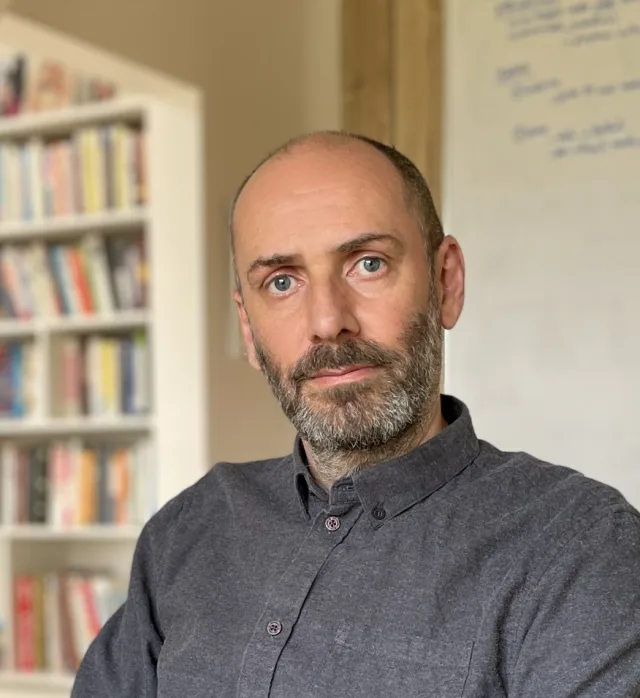
Peter Van Dijck is the founder of model context experience, where he teaches product managers, designers, and researchers how the best AI products are actually built: evals, observability, synthetic data, and context engineering, explained for people who are not engineers.
He has been building AI products full time since 2023, working hands-on with large language models, retrieval, and agent systems, and running the evaluation and observability loops that separate a demo from a product that holds up in front of real users. That day-to-day practice is the raw material for the course and for the articles on this blog.
Before AI, Peter spent fifteen years as a UX and product professional with an engineering background, and about ten years scaling product teams, most of it in New York. He wrote Information Architecture for Designers, co-authored an XML specification, and founded two startups. Companies that want to work with him directly do so through Helpful Intelligence.
The thread through all of it is a conviction that design and engineering are ways of solving problems, and that technology should be more accessible and useful for people. He lives in Madrid, Spain.
Context Design joins context engineering and alignment research with human-centered design and sociology, a new practice for building AI systems that work for people, not just models.
Who we build for and why they would pay: the personas, the three layers of what customers want to see, and the UX principles behind Sputnik Intelligence.
Anthropic launched Fable 5 on Tuesday and switched it off by Friday. The recall is a story — but the real question is why these models keep getting so good, so fast.
AI is happening. It needs UX and product. The only way to join the party is to re-focus on our core value and skills, and leave the artifacts, processes and tools we've built over the past 20 years behind.